Evidence-based
Sources, data, assumptions, uncertainties and limitations are registered before reliance is assigned.
Two connected governed AI systems for planning electrification and examining climate evidence—bringing demand, infrastructure, reliability, mechanisms, policy, costs, risks, investment and implementation into one decision architecture.
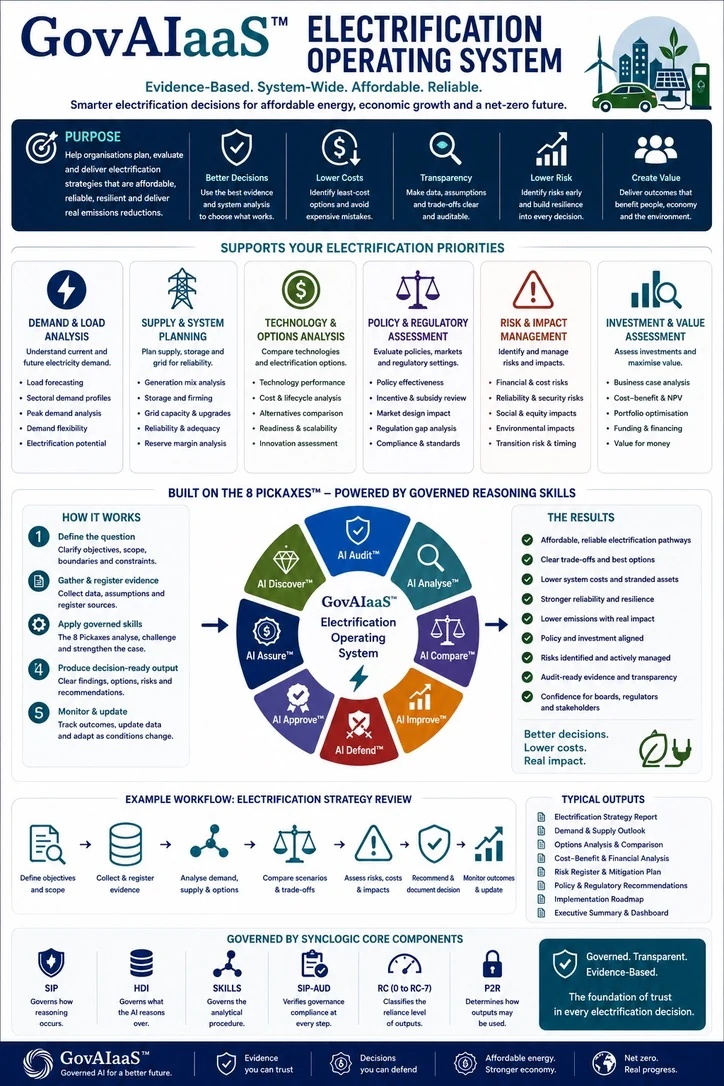 Open the Electrification Operating System
The Electrification Operating System focuses on demand, supply, infrastructure, technology, affordability, reliability and investment. The Climate Operating System focuses on claims, emissions, mechanisms, attribution, scenarios, impacts and disclosure. Together they support integrated decisions without collapsing distinct questions into one answer.
Sources, data, assumptions, uncertainties and limitations are registered before reliance is assigned.
Demand, networks, generation, storage, markets, policy, emissions and impacts are considered together.
Options are tested for cost, security, adequacy, resilience and implementation practicality.
Climate claims are separated into observations, mechanisms, attribution and decision implications.
Physical, transition, regulatory, financial, social and delivery risks remain visible.
Outputs include options, trade-offs, reliance limits, recommendations, roadmaps and monitoring measures.
Each system applies the same governed method and SyncLogic core components while addressing a different decision surface.
A governed decision architecture for planning, evaluating and delivering electrification strategies that balance demand, supply, reliability, affordability, infrastructure, emissions, economic value and implementation risk.
View the complete electrification system
A governed architecture for testing climate claims, registering evidence, separating observed change from mechanism and attribution, comparing scenarios, evaluating risk and producing decision-ready reports.
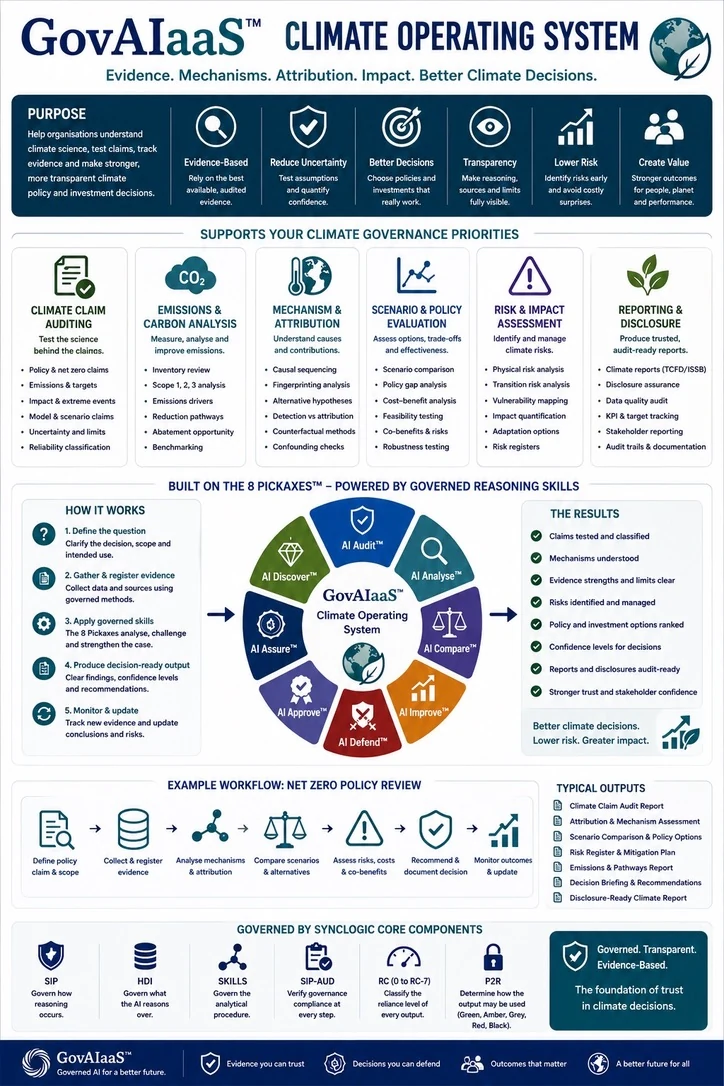 View the complete climate system
The architecture controls how reasoning begins, what evidence it uses, how specialist skills operate, how compliance is tested and what each output is permitted to support.
Defines the task, scope, evidence conditions, assumptions, decision authority and intended use.
Registers claims, data, mechanisms, alternatives, dependencies, limitations and the evidence surface.
Applies repeatable audit, analysis, comparison, improvement, defence, approval, assurance and discovery procedures.
Checks scope control, evidentiary compliance, unsupported claims, hidden synthesis, challenge and confidence.
Rates the output from orientation to decision-grade use according to evidence and verification strength.
States who may use the output, for what purpose, with what limitations and review conditions.
The infographics show the operating priorities, eight pickaxes, shared workflow, outputs and SyncLogic governance controls.
Authorised people decide public values, commercial objectives, risk tolerances and investment priorities. GovAIaaS structures the evidence, tests the alternatives, documents the reasoning and states what the resulting output is allowed to support.