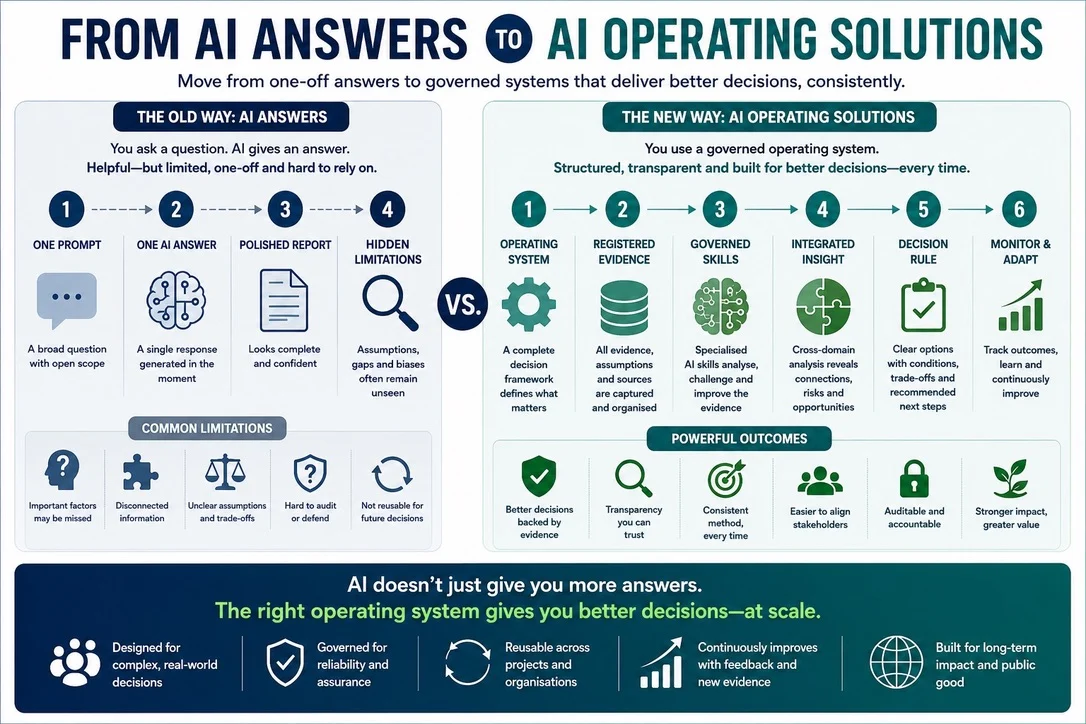
The old way
AI answers
- 1One promptA broad question with open scope
- 2One answerA single response generated in the moment
- 3Polished outputLooks complete and confident
- 4Hidden limitationsAssumptions and gaps remain unseen
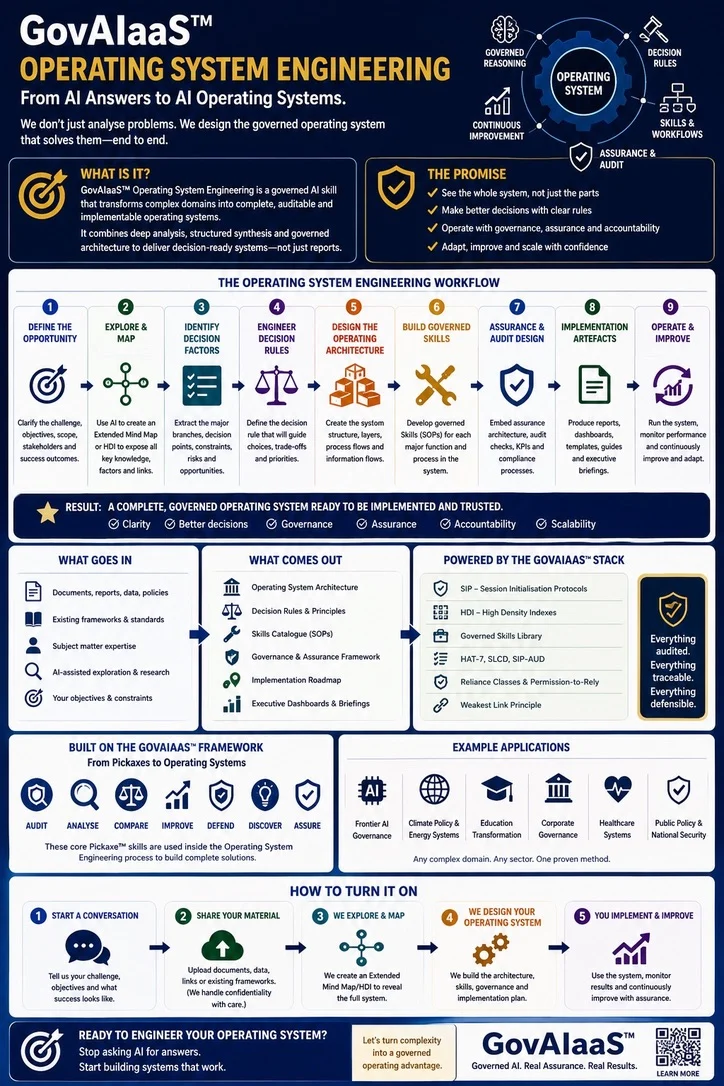
We do not just analyse problems. We design the governed operating solution that addresses them end to end—complete with evidence, decision rules, specialist skills, assurance, implementation artefacts and continuous improvement.
One-off responses can look polished while leaving scope, assumptions, evidence gaps and permitted use unresolved. An operating system makes the method visible, repeatable, auditable and improvable.
Each engagement moves from the decision opportunity through architecture, assurance and implementation—not just to another report.
Clarify the challenge, objectives, scope, stakeholders and success outcomes.
Use AI to create an extended mind map or HDI of the domain, factors and links.
Extract major branches, rules, constraints, risks and opportunities.
Define how evidence becomes choices, trade-offs and priorities.
Create the system structure, layers, workflows and information flows.
Develop specialist skills and SOPs for each function and process.
Embed assurance architecture, audit checks, KPIs and compliance controls.
Create reports, dashboards, templates, guides and executive briefings.
Run the system, monitor performance and continuously improve.
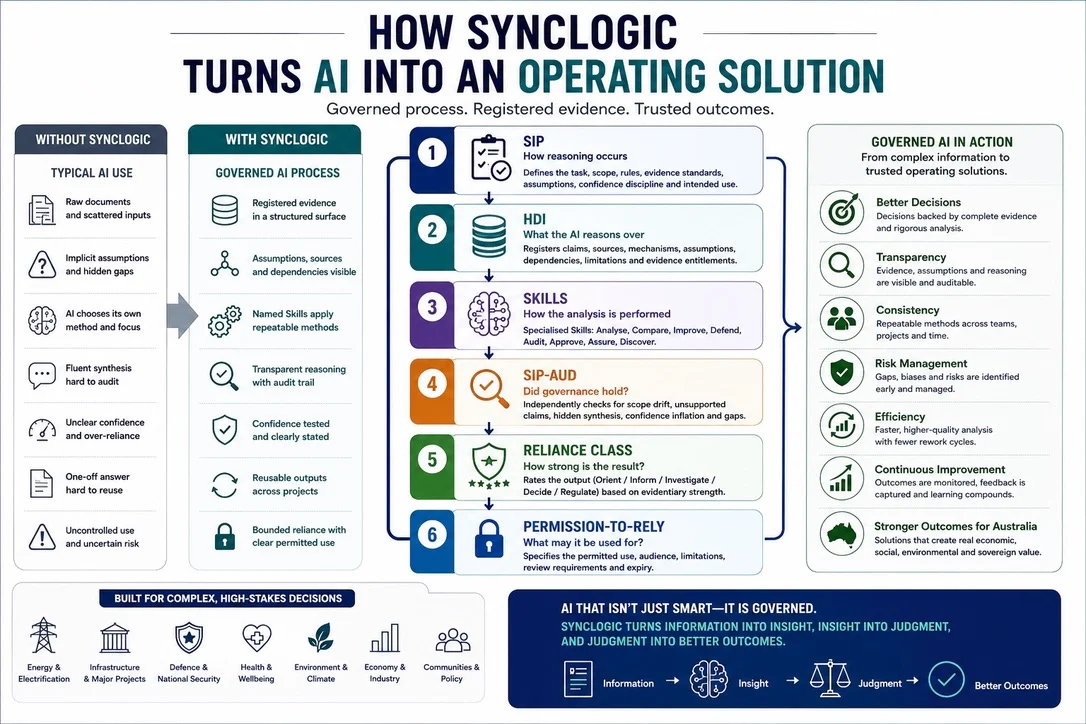
The system makes the evidence boundary, method, assurance result and permitted use explicit.
Defines the task, scope, rules, evidence standards, assumptions and intended use.
Registers claims, sources, mechanisms, dependencies, limitations and evidence entitlements.
Specialist methods to analyse, compare, improve, defend, audit, approve, assure and discover.
Checks scope drift, unsupported claims, hidden synthesis, confidence inflation and gaps.
Rates the output according to its evidence and verification strength.
States the permitted use, audience, limits, review needs and expiry conditions.
Each operating system receives its own page describing the decision problem, architecture, governed skills, evidence requirements, implementation artefacts and permitted reliance.
Governance, adoption, risk, evidence and decision controls for advanced AI systems.
Register interest →Explore the Electrification and Climate Operating Systems for evidence, reliability, mechanisms, policy, risk and investment decisions.
Explore the operating systems →AI-aware learning, assessment, assurance, capability and institutional transformation.
Register interest →Explore board papers, strategy, procurement, compliance, risk and investment decisions through one governed operating system.
Explore the operating system →Evidence-governed decision pathways for complex care, quality and system improvement.
Register interest →Explore the GovAIaaS Political Operating System, Political Policy Suite, Multi-Agent Policy Factory and five-day policy workflow.
Explore the operating system →Three foundation infographics explain the category, workflow and SyncLogic governance architecture.
GovAI Engineering applies the GovAIaaS™ and SyncLogic concepts to operating-system design: moving beyond prompt engineering toward governed architecture, repeatable specialist methods, registered evidence and decision-grade assurance.
GovAIaaS and SyncLogic are proposed framework and implementation concepts developed by Walter Shepherd. The work is informed by systems thinking, scientific evidence disciplines, quality auditing and the reasoning architecture developed in Rethinking AI Reasoning: From Prompts to Governed Thinking.